
Self-Sovereign Identity in Academic Environment
The goal of this project was to explore the user experience of Self-Sovereign Identity (SSI) in an academic context and design a service prototype that is understandable and usable even for non-technical users.
- My role: UX researcher, user flow designer, data analyst
- Duration: 6 months (Jan 2023 – Jun 2023)
- Team: Pavlína (UX lead), Dominik (developer)
Problem definition
Self-Sovereign Identity (SSI) is a modern approach to digital identity management based on decentralization and user data ownership. While it offers significant benefits in terms of privacy and security, it often feels abstract and overly complex to typical users.
In the academic environment (students and universities), we identified several key challenges:
- Complexity and long user flows – users often don’t understand individual steps.
- Distrust in data handling – users worry about who can access their personal data.
- Low awareness of SSI benefits – users lack the “why” to adopt the technology.
The main goals of the project were to:
- Simplify the user flow to make it logical and understandable.
- Verify user acceptance of SSI and uncover their motivation to use it.
- Provide recommendations for implementation in universities.
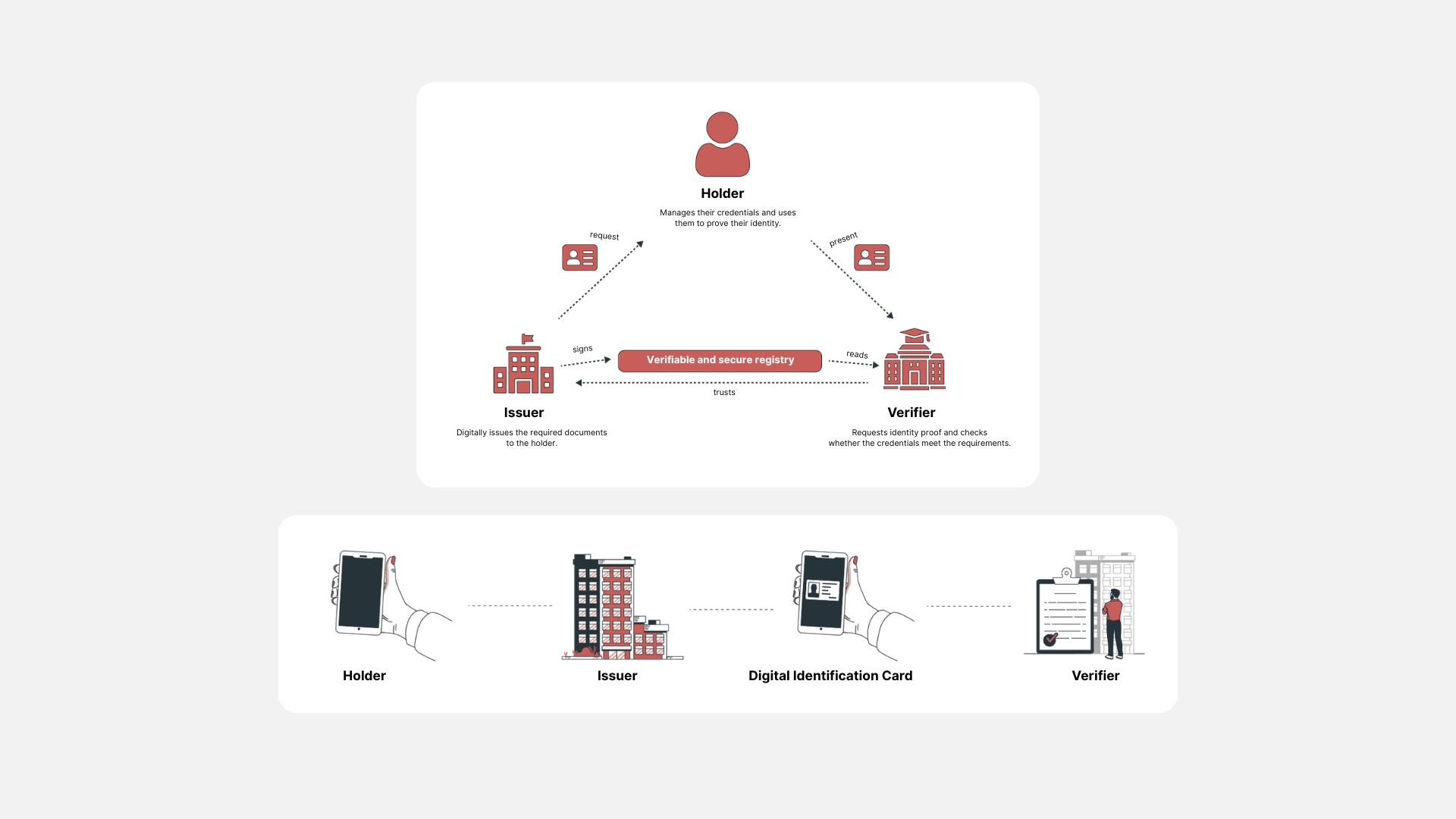
Research
Methodology
The research plan combined qualitative and quantitative methods:
- Competitive analysis – exploring similar digital identity management solutions.
- Demo walkthroughs – identifying strengths and weaknesses in existing prototypes and mapping possible user scenarios.
- Survey (n = 113) – targeting students and academic staff to understand their knowledge of digital identity, their stance on data ownership, and motivation to adopt SSI.
- User testing of the prototype (n = 19) – simulating SSI usage scenarios in the academic context (issuing and verifying identity).
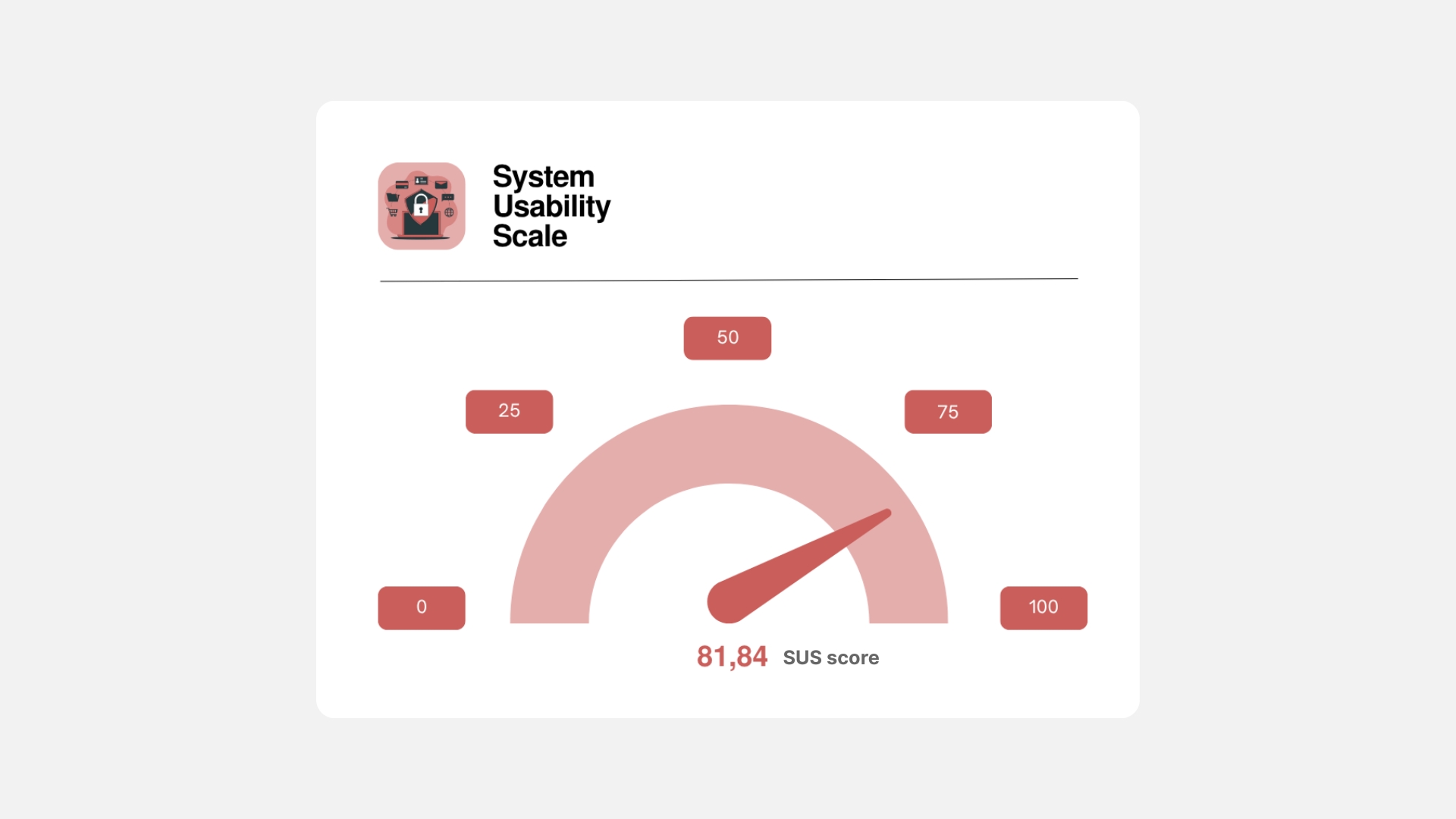
- SUS evaluation – measuring usability before and after adjustments, with a final score of 81.84 (above-average usability).
Key pain points:
- Overly technical terminology
- Steps without clear explanation of purpose
- Long and fragmented user flows
- Concerns about unclear data handling
What worked well:
- Clear onboarding with a simple explanation of the concept
- Simplified steps supported by visual icons and labels
- Users appreciated the data ownership principle once it was explained and understood
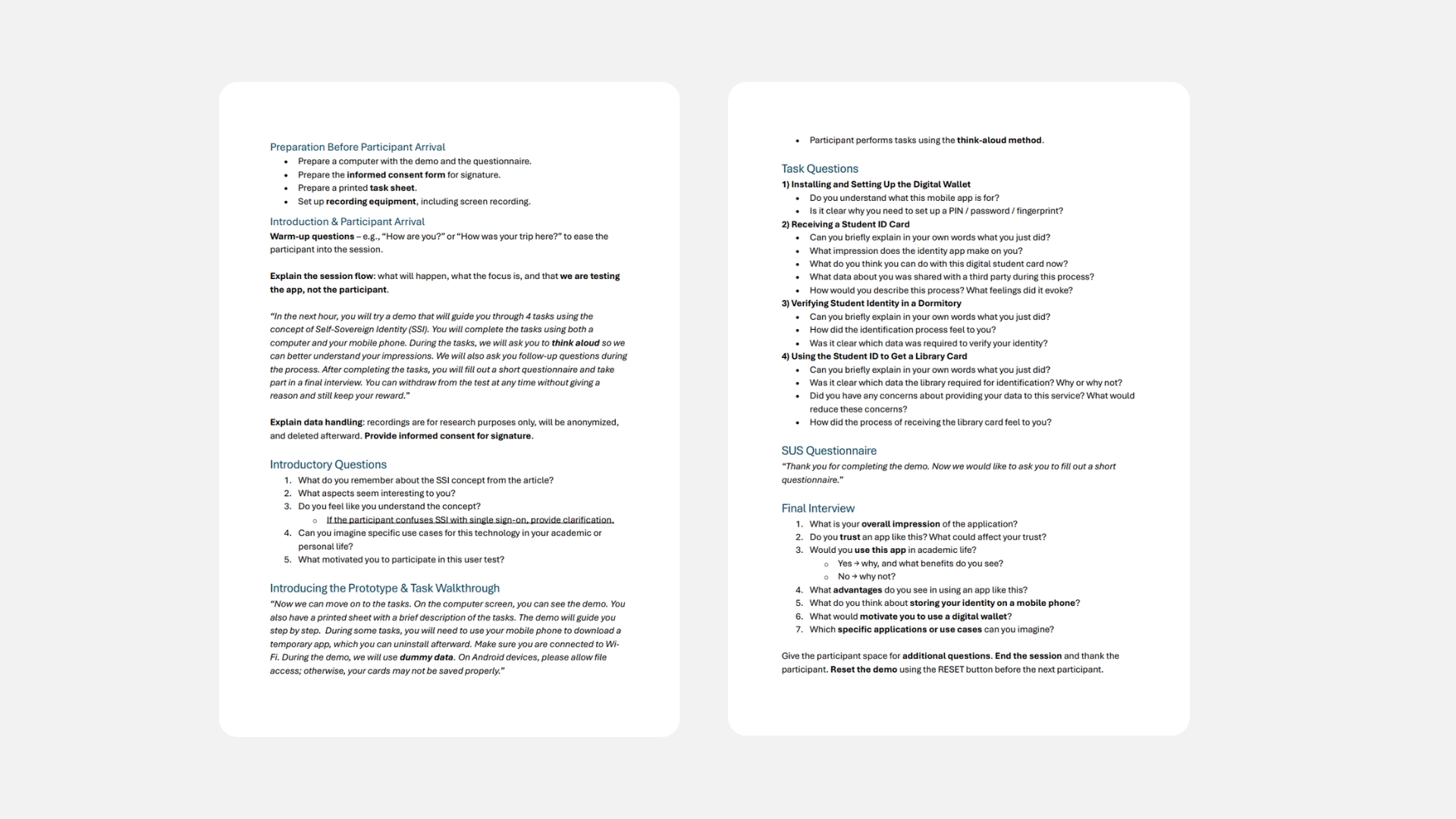
Ideation & Design
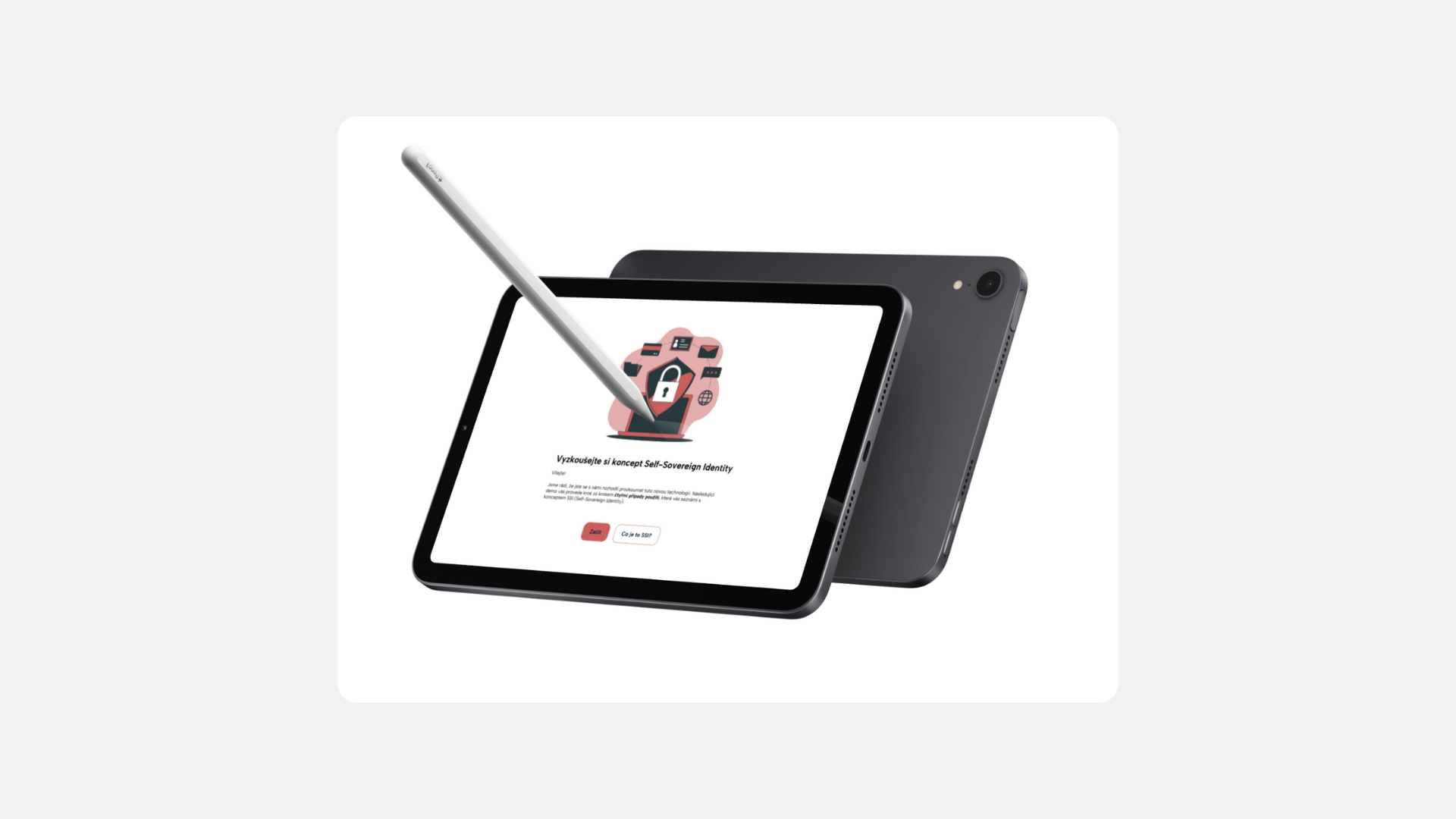
In this phase, I focused on user flow design and creating simple wireframes for testing.
I followed an iterative approach, where each round of testing informed adjustments to the prototype in collaboration with the developer: simplifying steps, refining copy, and clarifying flows.
Key design focus areas:
- Simplifying terminology – replacing technical expressions with user-friendly language
- Breaking the process into short, clear steps
- Adding microcopy (tips, short explanations) to increase clarity
Testing & Evaluation
User testing took place in two iterations.
- Scenarios simulated issuing a university identity, working with a digital wallet, and verifying the identity.
- After each step, we asked users if they understood what they did and why.
- We combined observation with follow-up interviews.
SUS Results:
- Round 1: 74 (good usability, room for improvement)
- Round 2 after adjustments: 81.84 (above-average usability)
Results & Impact
- Users expressed willingness to use SSI if the principle is clearly explained.
- The prototype was rated as understandable and usable.
- We identified additional scenarios for potential usage outside academia, opening the door to broader SSI applications.
Reflection
Challenges:
- Translating a complex technical concept into user-friendly language
- Balancing UX design with technical limitations
- Organizing testing and managing a large amount of data (113 surveys + 19 test participants)
What I learned:
- Combining quantitative and qualitative research in a single project
- Working with SUS evaluation and open coding of responses
- Designing user flows for complex services where user education is key
What I would do differently:
-
Validate terminology before the first test round
-
Iterate more frequently on smaller samples
-
Involve stakeholders more actively during the testing phase