
Showing product value before the first listing arrives
Product design • UX research • onboarding • product iteration • 2025
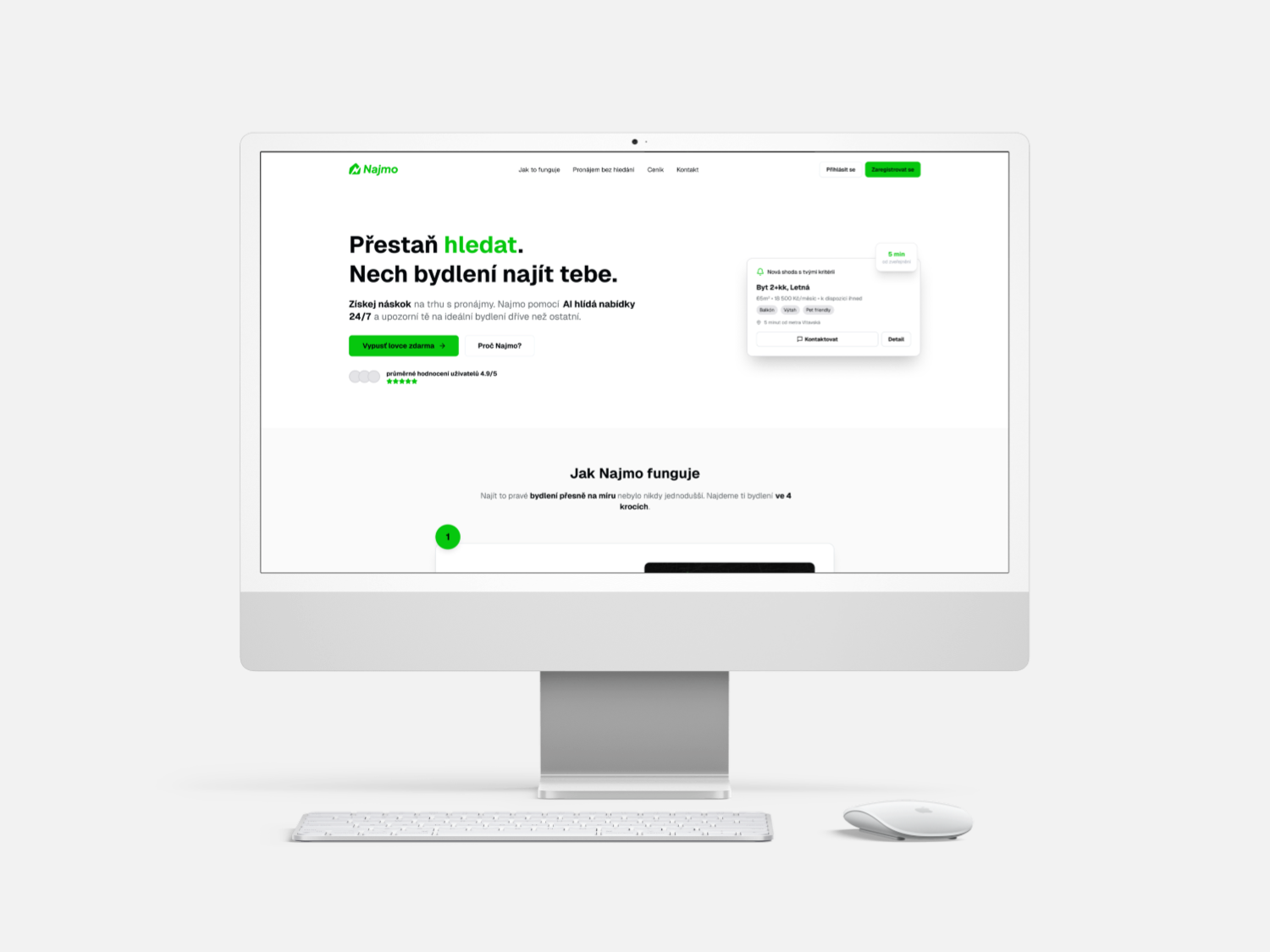
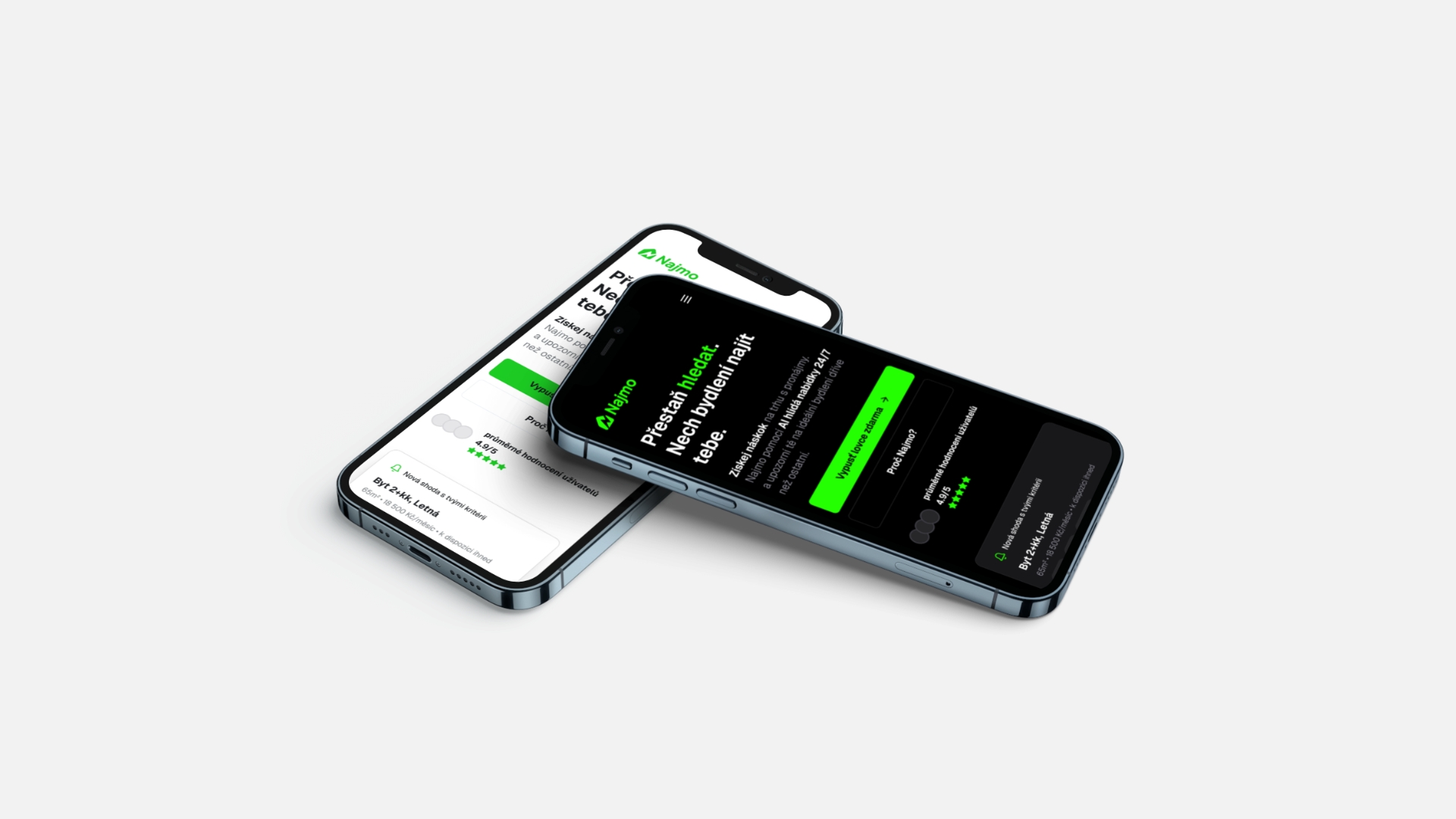
Najmo is a digital service that monitors new rental listings on behalf of its users and notifies them as soon as it finds a property matching their criteria.
I’ve been involved with the product since its early stages, working on UX across the entire experience. My work ranged from user research, core flows, and onboarding to notifications, email communication, and the UX of the marketing website. I designed the product UI together with another designer.
This case study focuses on one specific problem that only became apparent once people started using the product in real life. A user could successfully create their first rental hunter, yet still have to wait a long time before experiencing the value of the service.
Context
The hunter searches so users don’t have to
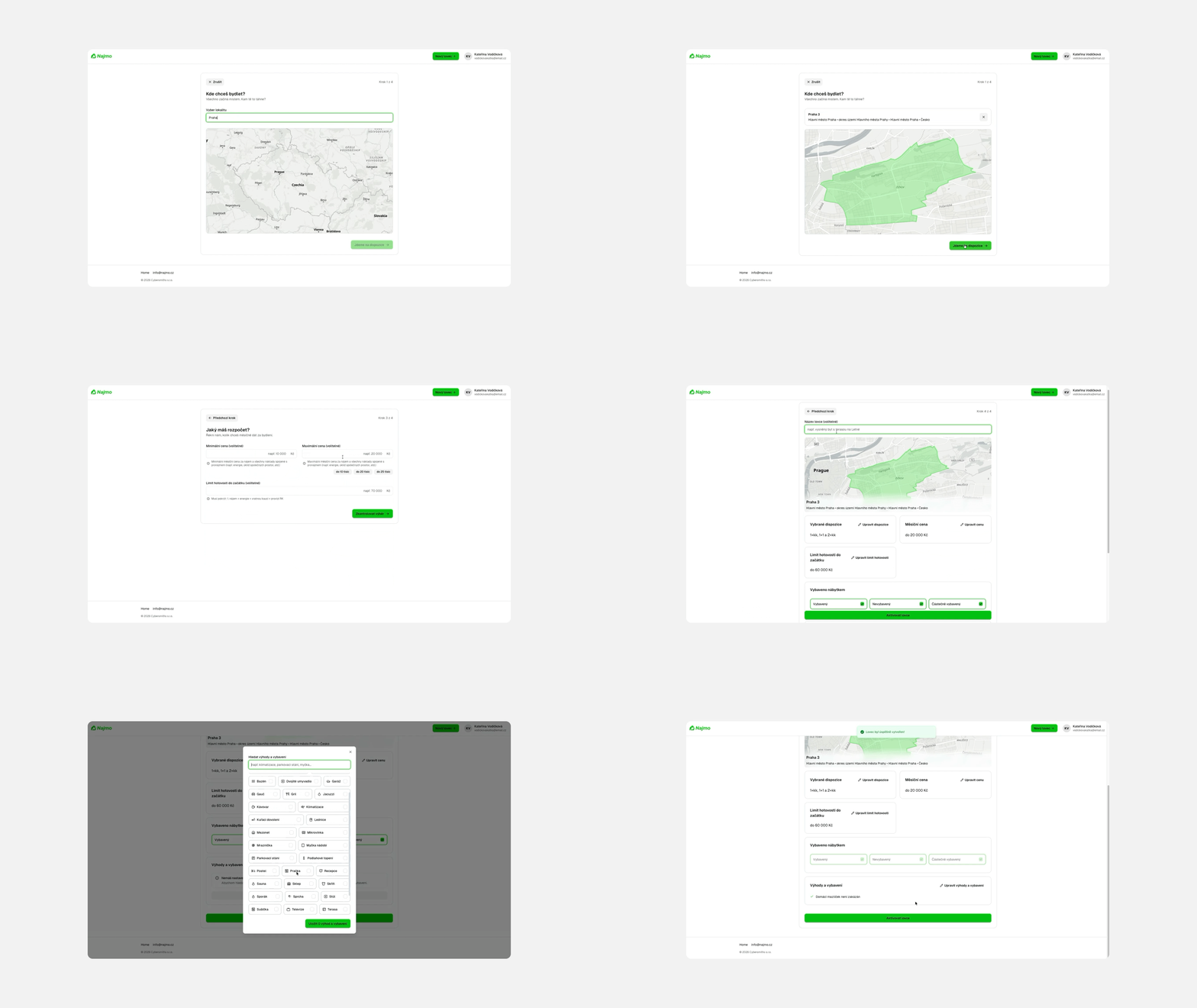
Najmo is built around the concept of a “hunter.” During onboarding, users define what kind of rental they’re looking for, including location, price, and other criteria, and create their own search.
The hunter then monitors new listings across several real estate platforms in real time. As soon as a listing matches the selected criteria, Najmo immediately notifies the user by email.
The app also provides an overview of all matches found. For each property, users can access the agent’s contact details and use a pre-written email to quickly express their interest.
The product uses a freemium model. The free version lets users try the service, while the paid version expands the number of active hunters and access to matching listings. For this case study, however, the pricing itself isn’t important. What matters is the moment when users first see what the hunter they just created can actually do for them.
create a hunter → monitor new listings → find a match → email notification → respond to the listing
And it was precisely between creating a hunter and finding the first match that we discovered a problem.
Problem
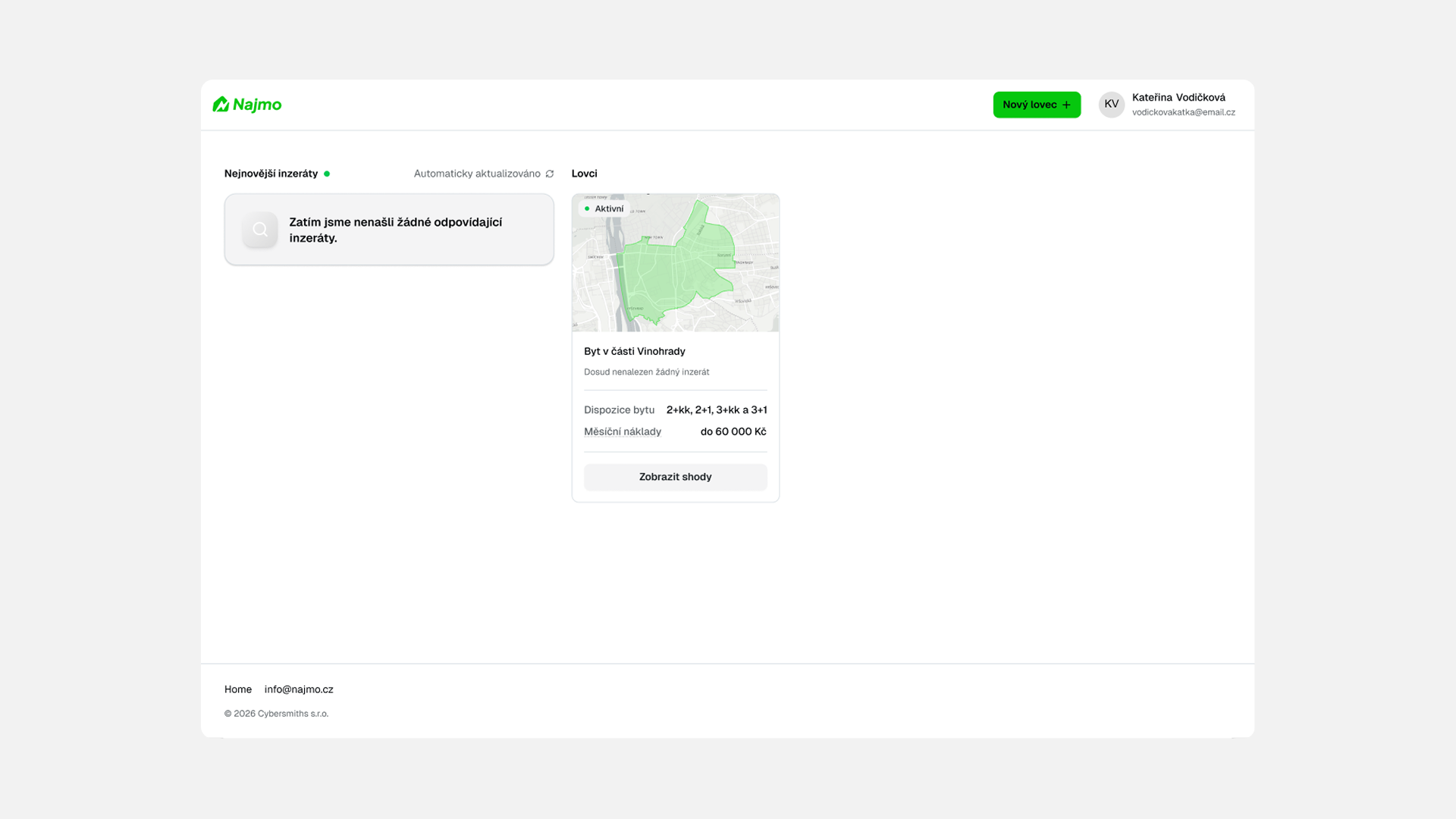
The hunter was active. But all the user saw was an empty page.
After successfully creating their first hunter, users landed on its detail page. If no new matching listing had appeared since the hunter was created, they were met with an empty state containing only a vague message that Najmo was “waiting for listings.”
From the system’s perspective, everything was working correctly. The hunter was active and continuously monitoring new listings.
From the user’s perspective, however, it wasn’t clear whether anything was actually happening or how long they were supposed to wait.
Technically, the hunter was working. But the user had no proof of its value yet.
The empty state created uncertainty
The problem gradually surfaced through several different sources.
In recordings of real product usage, we saw users spending an unusually long time on the empty page, moving their cursor around, repeatedly refreshing it, navigating back, or even creating another hunter.
Similar questions came up during usability testing. Users weren’t sure what would happen next, whether the hunter was actually working, or how long it might take for the first listing to appear. The same uncertainty also surfaced in direct feedback and user questions.
So this wasn’t simply a copy problem in the empty state. The experience was missing the first moment in which the product could demonstrate what the newly created hunter was actually capable of.
Insight
Completing onboarding doesn’t mean the user has experienced the product’s value
Initially, we treated creating a hunter as the successful completion of the main onboarding flow.
But from the user’s perspective, Najmo’s real value was still one step away. They needed to see a relevant property and understand that the criteria they had just set could actually lead to useful results.
The original experience looked roughly like this:
create a hunter → empty state → wait → maybe a listing appears
There could be a very long gap between completing the main action and seeing the first result, and that gap was outside our control. It depended on the rental market, location, and how specific the user’s criteria were.
We couldn’t make a new listing appear sooner. But we could change what users saw immediately after creating their hunter.
How might we show Najmo’s value before the first new listing arrives?
Solution
We didn’t need to wait for a new listing to show what the hunter could find
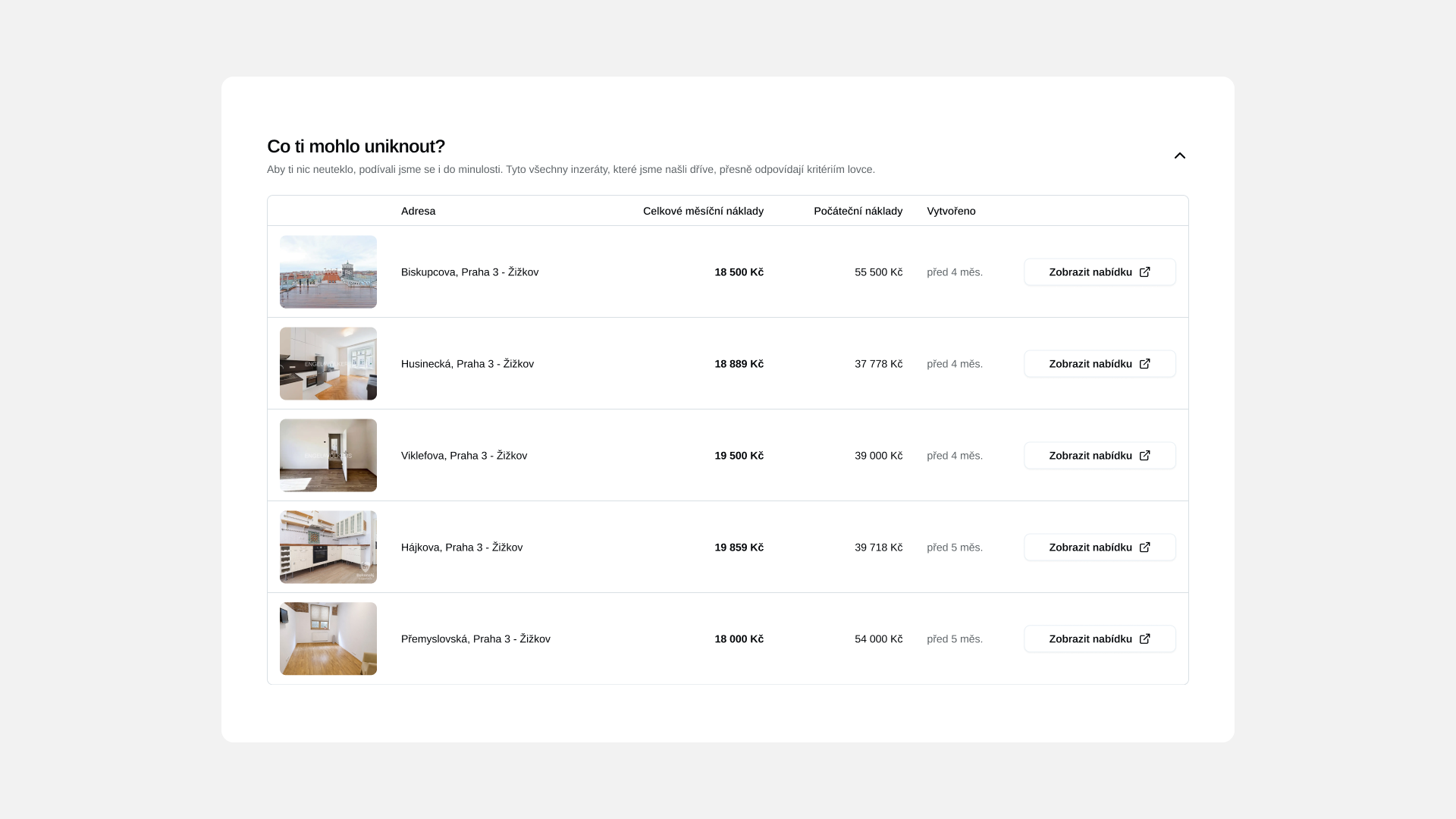
Instead of looking only at listings published after a hunter was created, we started working with existing listings that already matched its criteria.
After completing onboarding, users could immediately see examples of properties their hunter would consider a match.
In the free version, we made several matching listings available, while paid users could access all existing matches. The number varied significantly depending on the hunter’s settings. A very specific search might return only a handful of properties, while broader criteria could produce dozens or even hundreds.
The new experience looked more like this:
create a hunter → see matching listings → understand what the hunter is looking for → monitoring continues → get notified about a new match
This allowed users to experience the product’s value almost immediately.
The empty state needed to explain, not just inform
Existing listings couldn’t solve the problem in every case. With very narrow criteria or in areas with limited supply, there might be no relevant matches, even when looking back at previously published listings.
For these situations, we changed the empty state itself.
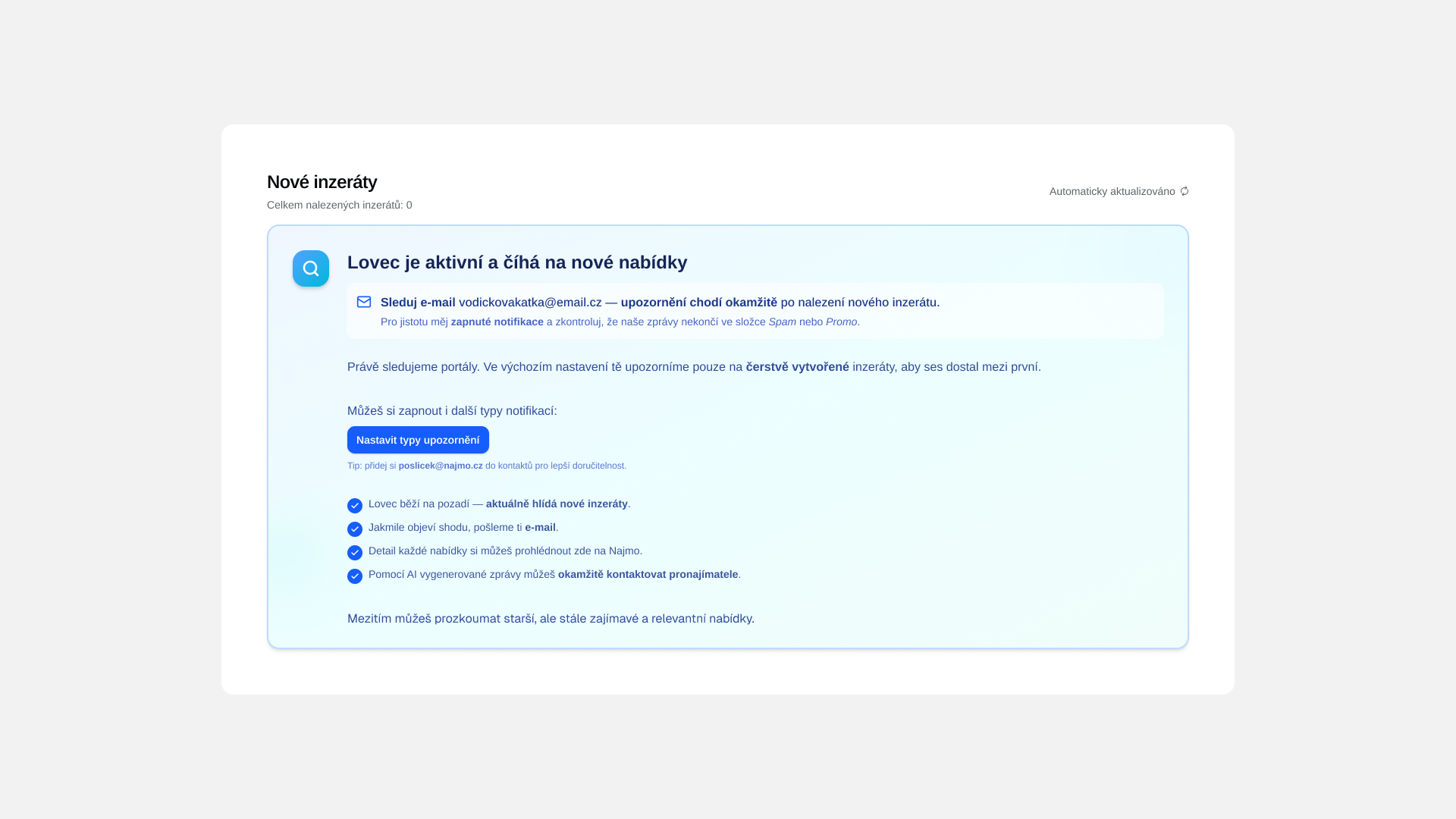
Instead of simply saying “we’re waiting for listings,” we explained why there was currently nothing to show, that no listings in the selected area matched the user’s criteria, and that it might therefore take some time before the first notification arrived.
When a search was particularly restrictive, we also gave users the option to return to their settings and adjust the criteria.
The hunter keeps working even after the user leaves
Another part of the solution was communicating more clearly that Najmo continues working in the background.
After successfully creating a hunter, we added a new email confirming that the search was active, explaining what would happen next, and reminding users that Najmo would notify them as soon as a relevant listing appeared.
For searches in areas with very limited supply, we could also recommend adjusting the search criteria.
This was important because of the very nature of the product. Najmo is supposed to work in the background. Users shouldn’t have to keep checking the app, but they do need to trust that their hunter is actively searching and will reach out when it finds something relevant.
Outcome
Less uncertainty after creating the first hunter
After the changes, completing onboarding no longer meant automatically landing on an empty screen.
In most cases, users could immediately see listings matching their criteria and better understand what kind of results their hunter was looking for. When no listings were available, they received a more specific explanation and an option to adjust their search.
We could also see the difference in subsequent product observation. During follow-up testing, users had a clearer understanding of what would happen after creating a hunter, related questions became less frequent, and screen recordings no longer showed the original pattern of users lingering on the empty state, repeatedly refreshing the page, or creating another hunter.
We turned a product with a delayed “aha moment” into one that could demonstrate its value immediately after the first hunter was created.